Ornamental Hummingbirds Font Review
I was staring at a blank brand board for a small, high-end botanical skincare line last Tuesday. The client wanted something that felt organic and delicate but still carried enough weight to look professional on a shelf next to major competitors. I had tried three different script fonts and two minimalist sans serifs, but nothing quite captured the specific whimsical yet refined vibe they were after. That is when I pulled Ornamental Hummingbirds out of my library. As a dingbats font, it does not behave like your typical typeface, but in this context, it became the secret ingredient the identity needed.
If you are a graphic designer, brand strategist, or small business owner looking to add a touch of nature-inspired elegance to your projects, understanding how to leverage a specialized tool like this can make a massive difference. This review breaks down my experience testing Ornamental Hummingbirds across various real-world applications, from logo drafts to packaging mockups, to help you decide if it belongs in your creative toolkit.
The Visual Personality of Ornamental Hummingbirds
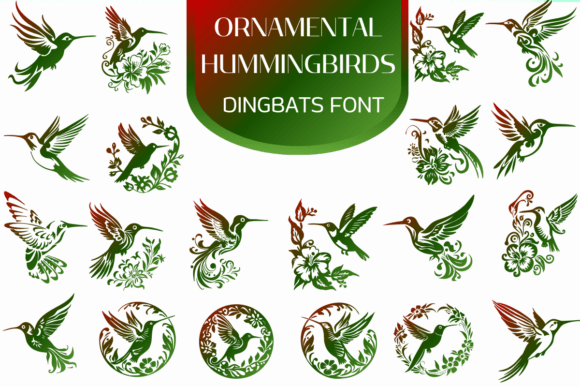
First, let us clarify what we are working with. Ornamental Hummingbirds is a lovely dingbats font. Unlike standard fonts that provide letters and numbers, this collection offers a suite of decorative glyphs, specifically focused on hummingbird motifs and related ornamental elements. When I first opened the character map, I was struck by the variety of poses and styles. Some icons are detailed and intricate, suitable for large-scale display use, while others are simplified silhouettes that work beautifully at smaller sizes.
The mood is distinctly airy, graceful, and connected to nature. It does not shout; it whispers. This makes it an excellent choice for brands that want to convey gentleness, precision, and beauty. In my testing, the lines were clean and vector-sharp, which is crucial when you are scaling these graphics up for a storefront sign or down for a business card. There is no pixelation or messy anchor points, which speaks to the quality of the underlying design.
Testing in Real Branding Scenarios
To truly evaluate a creative asset, you have to put it to work. I integrated Ornamental Hummingbirds into several stages of the skincare brand project to see how it held up.
- Logo Design: I used a simplified hummingbird glyph as a monogram mark alongside a clean serif font. The contrast between the organic shape of the bird and the structured lettering created a balanced visual hierarchy. It gave the logo a custom-illustrated feel without the cost of hiring an illustrator.
- Packaging Mockups: On the product label, I used a more detailed version of the icon as a watermark behind the text. It added depth and texture to the white space, making the packaging feel premium and thoughtful. It performed well in print simulations, maintaining its integrity even when printed in a subtle metallic foil.
- Social Media Graphics: For Instagram posts, I used the icons as bullet points and section dividers. This is where dingbats fonts shine. Instead of using generic dots or lines, the hummingbird elements tied every post back to the brand identity, creating consistency across the feed.
- Website Header: I placed a large, ornate glyph in the hero section of the homepage. It served as a focal point that drew the eye immediately, setting the tone before the user even read the headline.
In each instance, Ornamental Hummingbirds acted as a bridge between the text and the visual emotion of the brand. It did not just decorate; it communicated.
Strategic Pairing and Typography Harmony
Because Ornamental Hummingbirds is a display font and a set of icons, it cannot stand alone as your primary communication tool. You need to pair it with strong typography. During the project, I experimented with several combinations. I found that pairing these decorative elements with a modern sans serif font created a contemporary, clean look that appealed to a younger demographic. The simplicity of the sans serif allowed the intricate details of the hummingbird glyphs to pop without competing for attention.
Alternatively, pairing them with a classic serif font added a layer of tradition and luxury. This worked better for the skincare brand, which wanted to emphasize natural ingredients and time-honored recipes. If you are using this font for a bakery or a handmade shop, consider pairing it with a handwritten font for a more personal, artisanal touch. The key is to ensure the accompanying typeface has enough weight and presence to balance the delicacy of the dingbats.
Limitations and Practical Considerations
While I enjoyed using Ornamental Hummingbirds, it is important to recognize where it does not fit. This is not a font for long-body text. Do not attempt to write paragraphs with it. It is strictly a decorative element. If you are designing a corporate annual report or a legal document, this font will not serve your needs. Its strength lies in short phrases, logos, and accent pieces.
Readability is another factor. While the icons are clear, some of the more ornate versions may lose detail if scaled down too far. Always test your designs at actual size. I recommend printing out a draft of your business card or label to see how the finer lines hold up. If the details blur, switch to a simpler glyph from the set or increase the size.
Additionally, consider your audience. If your brand is targeting a rugged, industrial, or ultra-minimalist tech market, the whimsical nature of hummingbirds might clash with your brand perception. Know your niche. This font thrives in spaces that value aesthetics, nature, creativity, and softness.
Licensing and File Formats
Before you drop Ornamental Hummingbirds into your next client project, always check the licensing agreement. As a professional designer, I never assume a font is free for commercial use. Whether you are creating a logo, packaging design, web design assets, or merchandise for print-on-demand, you need to ensure your license covers these activities. Most premium fonts offer different tiers for personal and commercial use, so read the fine print.
Technically, the font file should be compatible with major design software like Adobe Illustrator, Photoshop, and InDesign, as well as web design platforms if webfont formats are included. Check if the package includes OpenType features, such as alternates or ligatures, which can give you more flexibility in your design assets. Having multiple file formats ensures you can use the font across digital and print mediums seamlessly.
In conclusion, Ornamental Hummingbirds is a versatile and charming addition to any designer’s library. It is not just a set of icons; it is a tool for storytelling. When used with intention and paired with thoughtful typography, it elevates brand identity and creates memorable visual experiences. Whether you are refreshing a café’s visual identity or launching a new line of handmade candles, this font offers a unique way to connect with your audience on an emotional level. Add it to your creative projects and enjoy the results.